 EN
How SKU Counts Get Out of Control
Most bakery brands do not set out to create SKU chaos. It accumulates. A new product launches, so a new box is designed. A seasonal item appears, so another box is added. A retailer asks for a different size, so a third box is created. Within two years, a brand that started with three products can be managing forty or fifty packaging SKUs, many of which are slight variations of each other. The problem is not the products themselves. It is that each packaging SKU carries its own tooling, its own minimum order quantity, its own storage requirement, and its own risk of obsolescence. The cost adds up in ways that are easy to miss until a warehouse is full of boxes for a product that was discontinued six months ago.
The Case for Breaking Packaging Into Components
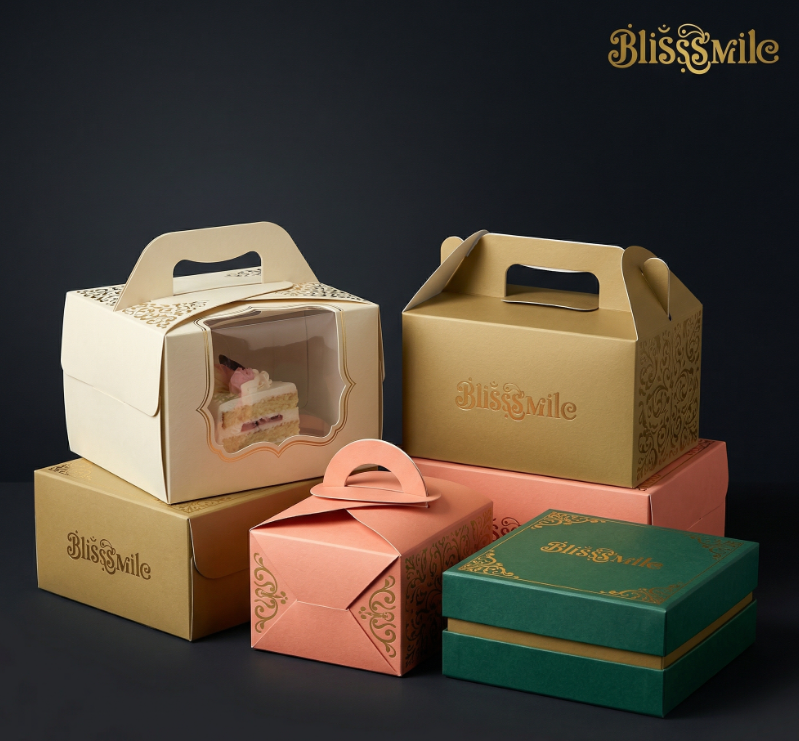
The alternative is to treat bakery packaging as a system of interchangeable parts rather than a series of unique finished items. A box becomes a combination of a base structure, a lid or closure, a liner, and a label. If these components are standardized within a range, the number of unique parts stays small while the number of finished configurations stays flexible. A brand can offer ten product variations using four base sizes, three lid options, and a handful of labels. That is the principle behind modular packaging. It does not reduce the variety the customer sees. It reduces the variety the factory and warehouse have to manage.
Standardizing Base Structures Without Losing Brand Identity
The fear with standardization is that everything starts to look the same. That fear is understandable but not accurate. A base structure can be shared while the printed graphic, the finish, the liner color, and the label all change to express different brand lines or occasions. The customer sees a distinct product. The operation sees a common component. The table below shows how a small set of components can generate a large number of configurations.
| Component Category | Number of Options | Example Variations |
|---|---|---|
| Base box size | 3 | Small, medium, large |
| Lid style | 3 | Tuck, magnetic, window |
| Liner type | 2 | Plain, compartmented |
| Label or sleeve | Unlimited | Brand, seasonal, promotional |
| Combined configurations | 18 plus | Before label variations are counted |
The math is straightforward. Three base sizes, three lid styles, and two liner types produce eighteen structural combinations before any label variation is added. That is enough range to cover most product lines without creating eighteen separate tooling sets.
Managing Minimum Order Quantities More Intelligently
One of the hidden costs of SKU proliferation is minimum order quantity. Every unique box has a minimum run, and if that minimum is higher than the actual demand for the product, the brand ends up warehousing excess packaging. Modular components reduce this problem because the same base structure can be ordered in larger quantities and used across multiple products. The volume goes up on fewer parts, which lowers unit cost and reduces the risk of dead stock. A brand that orders ten thousand units of a single base box can negotiate a better price than one ordering one thousand units each of ten different boxes. The savings are real and they compound over time.
A Case Where Modular Thinking Cut Complexity
A mid sized bakery brand was managing thirty two packaging SKUs across its product range. The packaging team mapped every box against its dimensions, material, and print requirements. The analysis showed that twenty three of the thirty two SKUs were variations of just four base sizes. By consolidating to those four bases and standardizing lids and liners, the brand reduced its active packaging SKUs from thirty two to eleven. The customer facing range did not change. The warehouse footprint dropped significantly, and the packaging team reported that reordering became much simpler because there were fewer items to track. That kind of consolidation is not glamorous, but it frees up working capital and reduces the risk of obsolete inventory.
Where Modular Packaging Has Limits
Modular systems are not a universal solution. Some products genuinely need a unique structure because of their shape, weight, or presentation requirements. A large celebration cake box, for example, has structural needs that a standard base cannot meet. Premium gift packaging often benefits from a custom structure that creates a specific unboxing experience, and standardizing that away can weaken the brand. The right approach is to identify which parts of the range can be modularized and which need to stay custom. Most brands find that the majority of their everyday packaging can be standardized, while a smaller share of premium or specialty items stays bespoke.
How a Systems Approach Supports Long Term Growth
Modular packaging is ultimately a systems question. It requires a partner who thinks in terms of components, compatibility, and scalability rather than individual box orders. BlissSmile operates as a B2B packaging system provider focused on bakery packaging for wholesale, brand, and premium buyers. The approach is to engineer scalable systems that grow with the brand rather than sell one off boxes that have to be redesigned every time a product changes. For brands dealing with SKU sprawl, that systems focus is what turns packaging from a source of complexity into a source of flexibility.
Table of Contents
- How SKU Counts Get Out of Control
- The Case for Breaking Packaging Into Components
- Standardizing Base Structures Without Losing Brand Identity
- Managing Minimum Order Quantities More Intelligently
- A Case Where Modular Thinking Cut Complexity
- Where Modular Packaging Has Limits
- How a Systems Approach Supports Long Term Growth