 EN
EN
Why Bakery Packaging Is a Different Design Problem
Bakery products are not like electronics or apparel. They are perishable, often greasy, sometimes fragile, and almost always bought on impulse. Custom packaging for a bakery brand has to do several jobs at once. It has to protect the product during transport, keep it fresh for the intended shelf life, communicate the brand in a crowded display case, and feel good in the customer's hand. Those requirements often pull in different directions. A material that provides excellent grease resistance may not offer the clarity that shows off the product. A structure that ships efficiently may not present well on the shelf. The design process is about finding the balance that fits the specific product and sales channel.
Defining the Buyer Type Before Any Design Work Starts
One of the first mistakes brands make is treating all bakery packaging as the same category. It is not. Wholesale buyers need packaging that stacks efficiently, ships without damage, and carries minimal branding because their own customers are the end users. Brand buyers need packaging that carries their identity and differentiates them on a shelf or in a display case. Premium and gifting buyers need packaging that feels substantial and justifies a higher price point through materials, finishing, and unboxing experience. These three segments have different budgets, different timelines, and different success metrics. A design that works for one is often wrong for another. Getting clear on which buyer type the package serves is the foundation for every decision that follows.
Material and Structural Choices That Fit the Product
The product itself dictates a lot of the material decisions. Grease resistance matters for pastries and fried items. Moisture barrier matters for items that need to stay crisp. Breathability matters for fresh bread, which releases moisture and can get soggy in a sealed package. The table below compares common bakery packaging materials.
| Material | Grease Resistance | Moisture Control | Print Quality | Relative Cost |
|---|---|---|---|---|
| Kraft paper | Moderate | Low | Good | Low |
| Coated paperboard | High | Moderate | Excellent | Medium |
| Corrugated board | Low to moderate | Low | Good | Low to medium |
| Greaseproof lined paper | High | Moderate | Moderate | Medium |
| Rigid box with insert | High with liner | High with liner | Excellent | High |
| Window film on board | Moderate | Moderate | Excellent | Medium |
The right choice depends on the product and how long it needs to stay fresh. A croissant sold the same day has different requirements than a boxed cookie meant to last weeks on a shelf.
The Design Phase: From Sketch to Prototype
Once the buyer type and material direction are clear, the design phase begins. This usually moves through several stages. A structural concept is developed, often with a dieline that shows how the flat material will fold into the final shape. Then a physical prototype is cut and assembled. The prototype is where problems show up that were invisible on screen. A fold line that looked fine in a drawing may crack when actually folded. A closure that seemed secure may pop open when the box is filled. A window that looked elegant may interfere with stacking. Prototyping is not a step to skip. It is the cheapest place to catch errors, because changes at this stage cost almost nothing compared to changes after production tooling is made.
Printing, Finishing, and Brand Expression
Printing and finishing are where the brand comes through. For bakery packaging, the print method often depends on volume. Digital printing works well for small runs and short lead times but costs more per unit at high volumes. Offset printing becomes economical at larger quantities but requires longer setup. Flexo printing sits in between and is common for corrugated and paperboard. Finishing options include matte or gloss lamination, spot UV, foil stamping, and embossing. These add cost, so they should be used where they have the most impact. A foil logo on the front of a premium gift box earns its cost. The same foil on a wholesale carton that gets thrown away immediately does not. Matching finishing to the buyer type keeps the cost structure sensible.
A Case Where Prototyping Saved a Launch
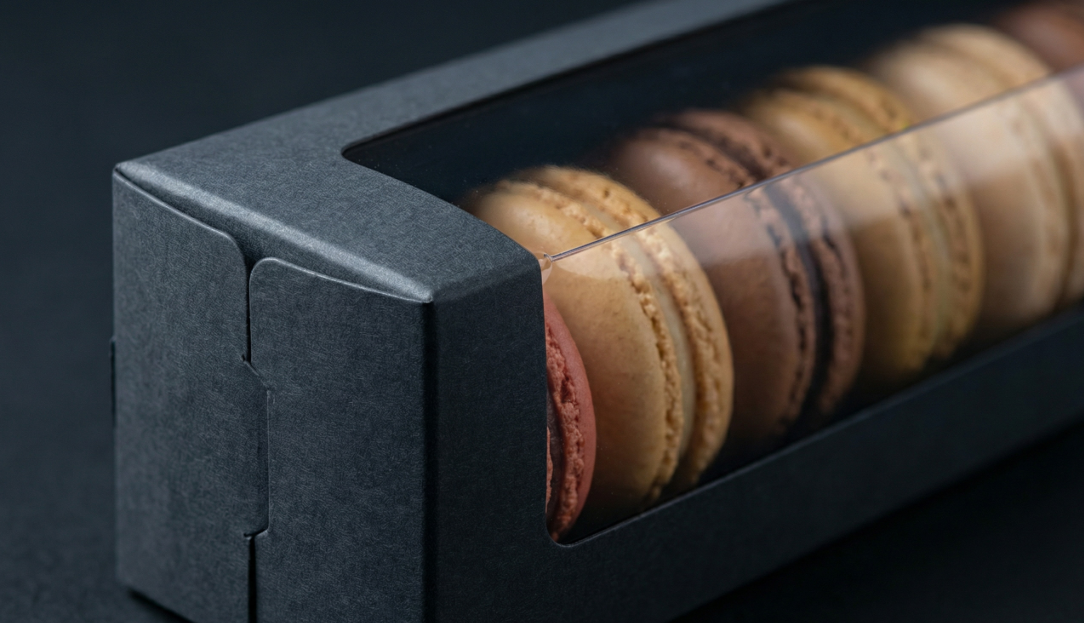
A bakery brand planning a holiday gift box had a design that looked striking in the digital render. The box had a magnetic closure, a window, and a die cut insert to hold six cookies. The first physical prototype revealed two problems. The window material reflected light in a way that obscured the cookies inside, and the insert did not hold the cookies firmly enough to prevent them from shifting during shipping. Both issues would have been expensive to fix after tooling was cut. The window was changed to a matte finish, and the insert was redesigned with a slightly deeper cavity. The revised prototype was approved and the launch went smoothly. That is the value of prototyping. It catches the problems that only appear when the design becomes a physical object.
Where Design Meets Manufacturing Constraints
Even the best design has to be manufacturable at the target volume and cost. A die line that requires excessive manual assembly will slow production and increase labor cost. A closure that needs tight tolerances will create quality issues when the material varies. A finish that is difficult to apply consistently will generate waste. The design team and the manufacturing team need to work together from early in the process, not just at the end. Brands that involve their manufacturing partner early get better results than those that finalize a design and then shop for a factory to make it. The constraints are easier to design around than to fix later.
How a Packaging Partner Supports the Whole Process
Custom packaging for a bakery brand is a system, not a single box. It includes the box, the liner, the label, and sometimes the bag inside. These components have to work together and arrive on schedule. BlissSmile works as a B2B packaging system provider focused on bakery packaging for wholesale, brand, and premium buyers. The approach is to engineer scalable systems rather than sell individual boxes, which means the packaging can grow with the brand as volumes increase and product lines expand. For bakery brands that need packaging that works from concept through production, that systems focus is what keeps the process manageable.
Table of Contents
- Why Bakery Packaging Is a Different Design Problem
- Defining the Buyer Type Before Any Design Work Starts
- Material and Structural Choices That Fit the Product
- The Design Phase: From Sketch to Prototype
- Printing, Finishing, and Brand Expression
- A Case Where Prototyping Saved a Launch
- Where Design Meets Manufacturing Constraints
- How a Packaging Partner Supports the Whole Process