 EN

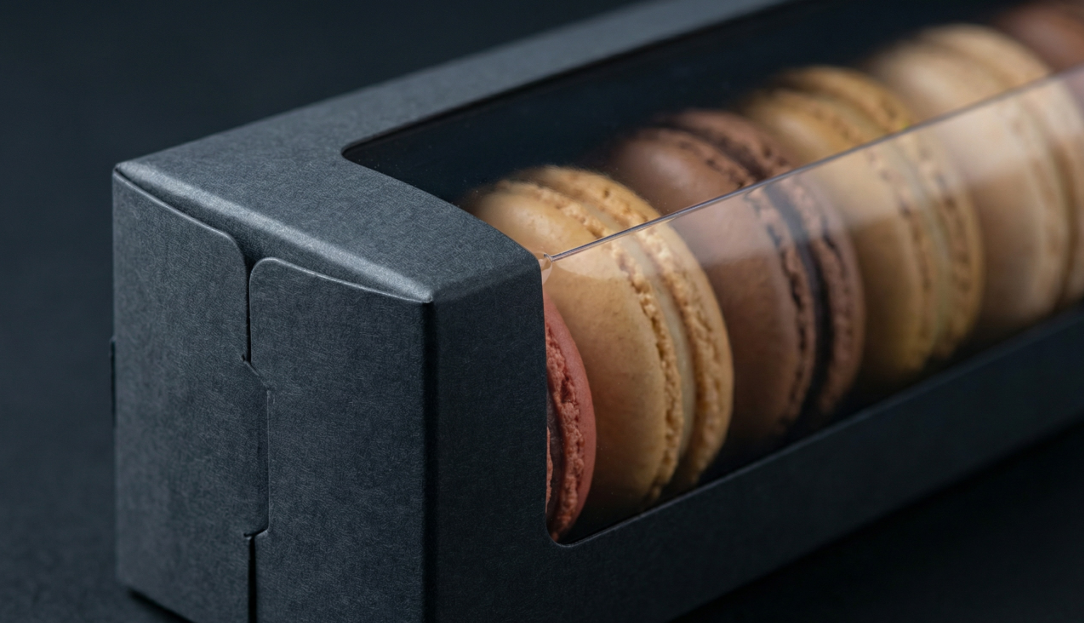
Optical Glare on Camera Sensors Versus Countertop Light Catching
Step inside a bustling neighborhood patisserie or a specialty grocery aisle, and the human eye naturally gravitates toward shimmering metallic foil, glossy viewing windows, and tactile linen embossing. When a structural team approaches bakery packaging design for physical retail shelves, catching overhead warm track lighting helps a pastry carton or a rigid macaron gift box stand out from three meters away. Yet the moment an e-commerce photographer places that exact same high-gloss laminated box under studio softboxes, the camera sensor records blinding white specular highlights that wash out the brand logo and obscure the baked goods inside. Human binocular vision automatically filters out surface glare by shifting viewing angles slightly, whereas a single camera lens captures flat, unforgiving reflection. Solving this dual-channel conflict requires calibrating surface sheen against TAPPI T 480 specular gloss benchmarks. By pairing a low-sheen matte dispersion varnish or soft-touch lamination across the main structural panels with localized hot-foil stamping restricted to under fifteen percent of the front face, the carton commands tactile elegance on a wooden bakery counter while photographing cleanly without blown-out highlights on mobile delivery apps and e-commerce storefronts.
Structural Insert Engineering for Courier Transit and Unboxing Shots
A folding cake box that survives a ten-minute walk from a local shop to a kitchen table will almost certainly fail when shipped through regional parcel networks or photographed for an online unboxing gallery. When a customer orders gourmet cookies, artisanal mooncakes, or frosted cupcakes online, the first physical interaction is also a digital marketing moment. Keeping fragile confections photogenic upon arrival depends on controlling three structural engineering details:
-
Custom-molded and die-cut cavity inserts: Replacing loose crinkle paper with precision-fitted paperboard partitions or thermoformed food-grade blisters stops heavy pastries from sliding into box walls and smearing buttercream across the viewing window.
-
Anti-fog and grease-resistant barrier coatings: Applying food-safe aqueous barrier linings on the interior board prevents butter and oil from wicking through crease lines and creating dark, greasy stains under studio macro lenses.
-
Multi-SKU dieline family grids: Locking typography proportions, window margins, and Pantone ink densities under ISO 12647-2 offset printing rules across five to eight box sizes ensures that a brand's entire product lineup looks cohesive on both a multi-tier store fixture and a three-column smartphone product grid.
Comparing Physical Retail Display Demands Against E-Commerce Visuals
Balancing brick-and-mortar merchandising mechanics against digital thumbnail conversion requires adjusting typography scale, window films, and board caliper across buyer tiers.
| Packaging Engineering Dimension | Physical Bakery Counter & Retail Shelf | E-Commerce Thumbnail & Delivery App | Omni-Channel System Solution |
|---|---|---|---|
| Surface Coating & Gloss Level | High-gloss UV or metallic foil attracts aisle walkers | Matte or satin finish prevents studio strobe glare | Soft-touch matte base paired with micro-embossed spot foil |
| Viewing Window Architecture | Wide top-and-front acetate wrap for multi-angle viewing | Recessed anti-fog flat window to avoid curved distortion | Flat low-glare PET window with rigid wide frame borders |
| Typography & Brand Hierarchy | Subtle artisanal serif fonts readable at arm's length | Bold, high-contrast logotype legible on 150-pixel screens | Locked brand grid balancing clean hero logos with fine print |
| Internal Product Immobilization | Flat greaseproof base pad for calm upright carrying | Precision cavity inserts locking every pastry in place | Modular insert trays adaptable across seasonal SKU families |
The technical comparison above explains why growing pastry and gifting brands move away from buying random single-SKU stock boxes. When each seasonal box comes from a different uncoordinated vendor, inconsistent board shades and shifting foil placement ruin both the physical shelf block and the online catalog layout.
Field Lessons from a San Francisco Artisanal Pastry Brand Rollout
Treating packaging as a last-minute commodity purchase frequently backfires when a regional bakery expands into nationwide e-commerce gifting and grocery wholesale. During an autumn holiday launch for a San Francisco-based artisanal tart and confectionery brand, the marketing team ordered six different carton sizes from three separate spot-market printers. Two major failures hit the rollout immediately. On the e-commerce side, the flagship rigid gift box used a glossy full-bleed dark navy wrap with large gold foil panels and a curved plastic window; studio photographers spent three days fighting mirror-like reflections on the window, and customers sharing unboxing photos on social media complained that cocoa dust and oil smudges clung visibly to the glossy lid. Worse yet, on the wholesale grocery shelf, the six different SKU boxes displayed three noticeably different shades of cream and navy because no master specification locked the paper stock or ink density. Rebuilding the entire lineup as a unified packaging system solved both problems before the winter peak. Engineers locked a single food-grade matte ivory board specification across all six dielines, replaced the glaring curved plastic sheet with a flat anti-glare window, and engineered a stepped rigid-box insert that held every tart stationary during parcel drops. Studio shoot times dropped by half, wholesale shelf blocking looked razor-sharp, and archived dieline specifications allowed the brand to trigger seasonal reorders in days without re-sampling.
Buyer-Specific System Trade-Offs and Sourcing Scalable Packaging
Not every commercial food or retail operation needs a heavy magnetic-closure rigid gift box for daily turnover. High-volume wholesale distributors supplying supermarket bakeries prioritize flat-shipped folding cartons with locked material specs, stable batch pricing, and fast replenishment cycles over intricate multi-pass embossing. Conversely, private-label brands launching five to eight coordinated seasonal SKUs need flexible structural families that share common master parent sheets, while luxury gifting confectioners require micron-accurate foil registration and custom insert engineering to justify premium retail price points.
For wholesale buyers, private-label brands, and luxury gifting houses seeking predictable execution from initial brief to final delivery, BlissSmile engineers complete, scalable packaging systems rather than disconnected boxes. Through a transparent four-step workflow backed by five strict quality-control checkpoints, locked technical specifications, and reorder-ready documentation, the team delivers consistent structural precision and fast reorder turnarounds across global markets.
Table of Contents
- Optical Glare on Camera Sensors Versus Countertop Light Catching
- Structural Insert Engineering for Courier Transit and Unboxing Shots
- Comparing Physical Retail Display Demands Against E-Commerce Visuals
- Field Lessons from a San Francisco Artisanal Pastry Brand Rollout
- Buyer-Specific System Trade-Offs and Sourcing Scalable Packaging