 EN
EN

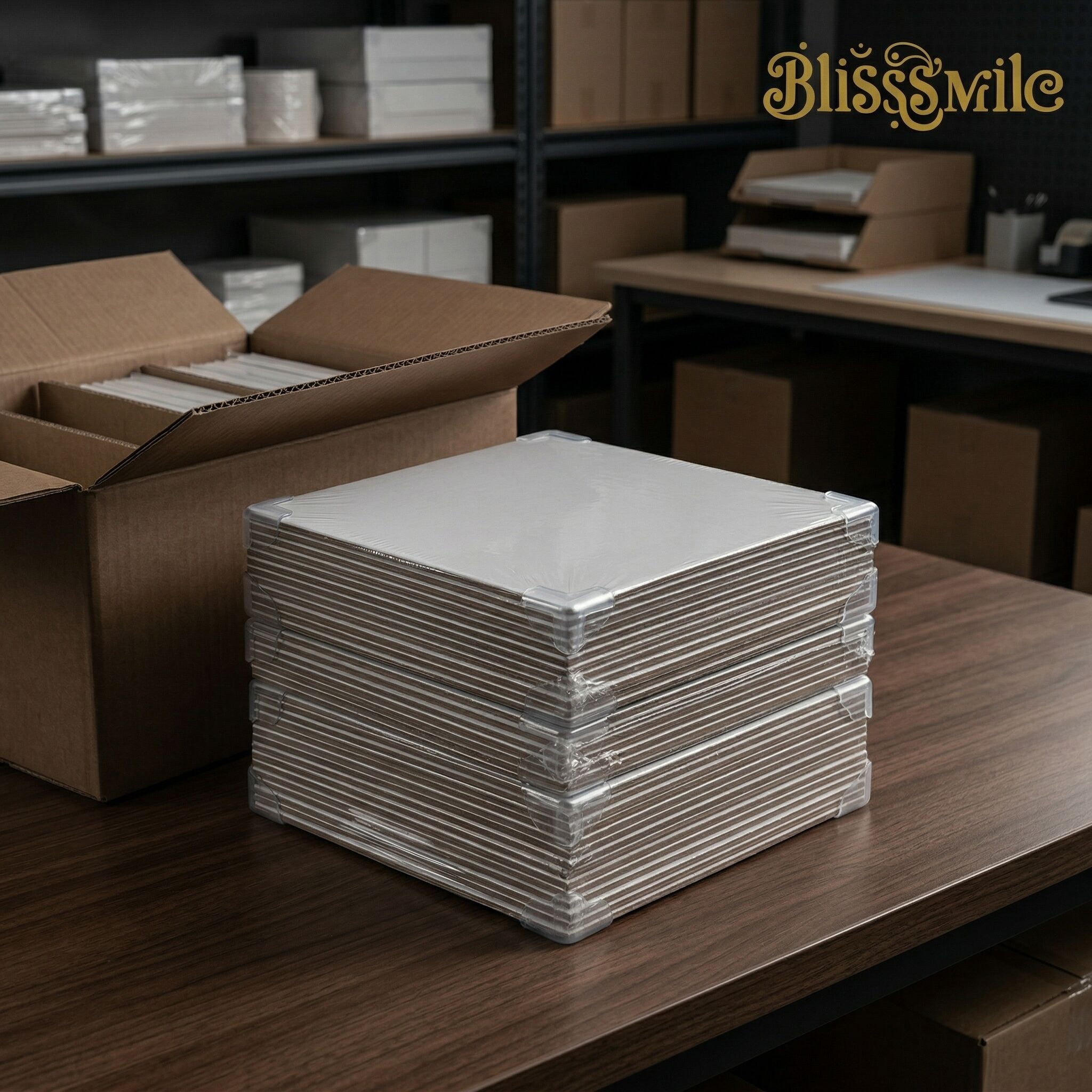
You have probably felt the infuriating effect of a cake board bending while lifting a cake, and subsequently watching the cake crack, and the icing shift, completely ruining what was presumably a perfect cake. This makes understanding the implications of cake board thickness and load capacity integral to delivering cakes in perfect condition.
In addition to a stable base, cake boards also provide a structural foundation that ensures everything remains in place and altogether. Therefore, knowing the right thickness and differentiating circumstances in which one should use a standard board or a drum board, could determine smooth deliveries or chaotic cake incidents.
There is more to thickness than you might think
Cake boards are produced in a variety of thicknesses, which are represented in millimeters or in points. One of the most significant factors that thickness is a determinant of is the load bearing capacity of a board, meaning how much weight the board is capable of supporting before bending. Boards that are thin, which are usually between 1.5mm to 2mm, are suitable for lighter items like cookies and single layer cakes that are not heavy. They also tend to take less space, and are usually the cheaper option.
Stronger support and protection is needed for larger cakes and heavier desserts. Boards that are thick enough (3mm and above) are less likely to bend to support the weight of the cakes and desserts. With the right board, a confection can go from the countertop to the customer without a bend in the board, keeping the cake intact.
In the 2.5mm range, there are also boards. A board like this is a great compromise for cakes of a weight that is moderate to a little above moderate, and does not need the support of a board that is 3mm thick or more.
Light chiffon cakes and whipped cream layers do not create a large amount of stress on a board, but a layered chocolate cake or dense fruitcake with rich buttercream are significantly heavier, and need a board that can handle the weight.
Wet fillings, ganaches, and similar ingredients can create a situation in which the board of the cake becomes soft over time. Moisture can also create a situation in which the board of a cake becomes soft over time. A thicker board gives the greatest resistance to create this scenario and also helps the board remain rigid for long periods of time.
For individual tier cakes that are around eight inches, a 2mm or 2.5mm board is acceptable. If it is a larger, denser individual tier cake, 3mm is a better option. If the cakes are either going to be stacked or moved over a long distance, using a thicker board is generally better.
Understanding load capacity
Load capacity is the total weight a board can support without breaking or being damaged. Exact definitions are based on the materials and how the boards are made, but in general, thicker boards are able to support more weight. Other than thickness, the quality of the materials is important too.
While lower quality boards of the same thickness are not going to be as good, a higher quality cake board will perform better. Some boards are designed not to be thicker, but to give the board more strength. If you are going to get boards and you use a lot of heavy cakes, this is something to keep in mind.
If you are uncertain of the thickness you need, test it on the heaviest cake you have. If the cake on the board is significantly bending, the board is inadequate. If it is a good thickness, the board will not bend and will remain rigid.
What are drum boards
Drum boards are a specific type of cake board that are thicker than standard boards. They are usually 12mm to 20mm thick. They are called drum boards due to the drum shape with a thick border around the edge.
These boards are for heavy use. They are the first choice for wedding cakes, multi tiered cakes, and cakes that will be transported long distances. Their thick construction gives them exceptional strength and stability. The raised edge also helps to lift and carry the cake without touching the sides, which is especially useful for heavy cakes.
Drum boards are not essential for everyday baking. For a simple dessert, a standard board is fine. However, drum boards are necessary for cakes that are high value, that are at high risk of damage, and where presentation is crucial.
When to use drum boards
Typically, the choice to use a drum board depends on three main criteria: weight, size, and how far it would have to be transported.
Drum boards are required if a cake is heavy to the extent that a regular 3mm board bends from the cake. They are also often required for the bottom tier of a multi tier cake because each tier can be separated with its own board, and the tier that holds the most weight needs a drum board due to the total weight of all the tiers combined.
When cakes are going to be delivered far from the bakery, extra safety is always a good idea to minimize the risks of shifting cakes. The non flexing and non warping construction is also a good idea if the transportation box gets jostled.
It is a sign of good quality to use a drum board for wedding cakes because the cake board is relatively inexpensive and a wedding cake is very expensive. It is important to think of the balance between the cost of the safety board and its usefulness in the given situation.
Because most daily orders are of low weight, drum boards are normally an excessive use of board material. However, for a heavy wedding cake, a thin board would be an extremely poor decision, and a board of adequate thickness would be very appropriate.
Balancing inventory and supplier choice
An efficient strategy is to stock varying thicknesses of boards. This can be in the form of thin, medium, and drum boards. Thin boards can be used for lightweight orders, medium boards for standard sized cakes, and drum boards can be used for large or high value orders. This will improve inventory efficiency and ensure you have the right boards for each cake.
For example, some bakeries order specific drum board sizes for weddings as drum boards are bulkier and take up more space, so it is best to be careful in managing those.
When it comes to board suppliers, the best ones ensure uniformity in the thickness, quality, and size of the cake boards each time. This means the shipment will not have boards with varying qualities. Some suppliers set specifications to make this easier.
It is also important to take into consideration the quality of board suppliers, as boards that come into direct contact with cakes will need to be industry standard in both food grade paperboard and coatings that meet FDA or EU standards.
The website states that they source materials from food grade paperboard and are FSC certified. They also mention batch consistency and locked specs for reorders. These are indicators that the supplier is committed to quality.
Practical tips for daily use
In a busy bakery, a system for boards makes everything easier. For example, you could separate boards by size and thickness to make it easier to grab what you need. If you use drum boards for special orders, keep them separate from your daily use boards.
The board that you use to assemble the cake should be clean and dry. If it is a drum board, make sure the rim is intact and the surface is smooth. A damaged board can ruin the presentation just as easily as a bent one.
When you are making wholesale orders, make sure to remember which thicknesses you use most. For example, if you find that you reach for 3mm boards more often than 2mm, make sure to order 3mm boards next time.
Conclusion
A properly fitted cake board ensures that it will do its job properly. The thicker the board, the more weight it can support. The load capacity of a board describes how strong a board is, while drum boards provide the support needed for the most demanding cakes.
Standard boards are adequate for everyday cakes. However, drum boards are essential for wedding cakes, multi tiered cakes, or any cakes that require long distance transport, as they provide the stability and support necessary. Utilizing the correct cake board both safeguards your craftsmanship and guarantees that the cake will look as intended upon leaving your kitchen.