 EN

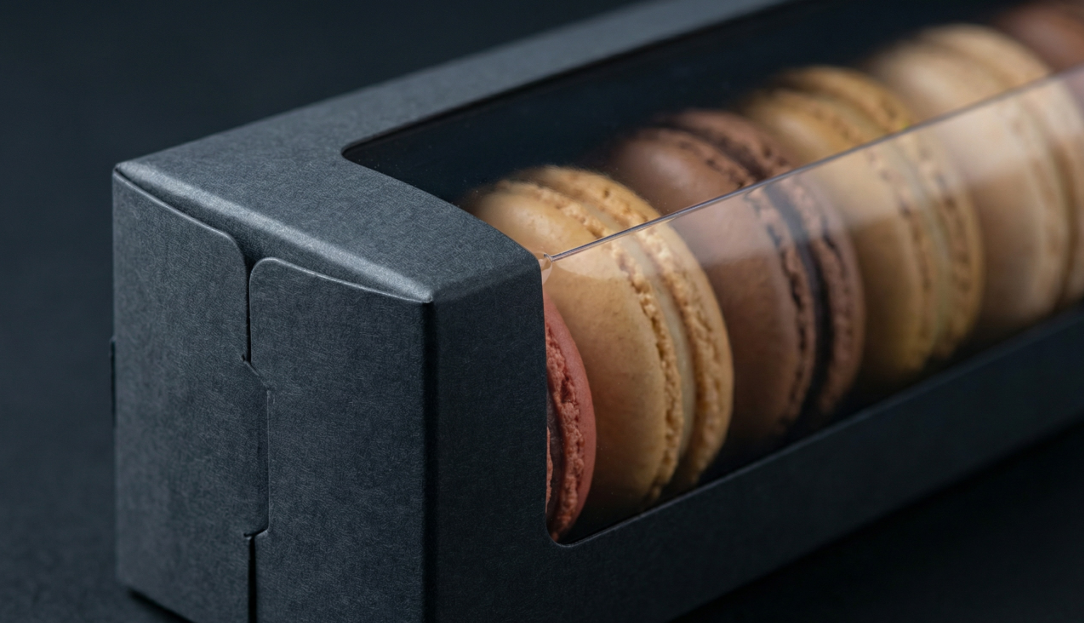
Capillary Lipid Wicking and Score-Line Barrier Fractures
Nothing ruins the presentation of a twelve-dollar artisanal croissant or an assorted butter cookie gift box faster than a dark, translucent grease ring bleeding through the bottom corners onto a customer's car seat. When structural engineers approach bakery packaging design for lipid-rich confections, the primary physical enemy is capillary wicking inside uncoated cellulose fibers. Paperboard consists of a porous network of wood pulp fibers crisscrossed by microscopic air channels. As soon as warm butter, shortening, or cocoa butter touches raw virgin kraft or unlined ivory board, low surface tension pulls the liquid fat into those fiber capillaries. Within thirty minutes, the absorbed oil replaces the air pockets between fibers, changing the refractive index of the paperboard and creating an ugly dark stain that also weakens structural stiffness. Even worse, standard clay coatings or thin varnishes often crack along ninety-degree die-cut score lines during high-speed folding. Unless the barrier layer stretches elastically across the crease channel, melted fat bypasses the flat surface coating entirely and wicks straight out through the folded corners.
Decoding TAPPI Kit Ratings and PFAS-Free Barrier Chemistry
Ordering "greaseproof board" without locking down a measurable numerical threshold invites batch-to-batch failures on the packing line. Industry testing relies on the TAPPI T 559 Kit test, which drops progressively harsher mixtures of castor oil, toluene, and heptane onto the board surface and assigns a rating from Kit 1 (minimal oil holdout) up to Kit 12 (maximum resistance to hot, aggressive fats). Modern food safety compliance also demands achieving these high Kit levels without legacy fluorinated chemicals. Specifying compliant, food-safe lipid barriers under FDA 21 CFR 176.170 guidelines involves evaluating three primary inner-liner architectures:
-
Water-based acrylic and biopolymer dispersion coatings: Applied inline or offline onto the interior side of folding cartons, these PFAS-free aqueous barriers form a flexible, continuous film that handles moderate-to-high butter content without blocking municipal paper recycling streams.
-
Extrusion-laminated polyethylene or polylactic acid (PLA) films: Bonding a thin thermoplastic polymer layer onto virgin paperboard delivers complete liquid and oil holdout for wet fruit pies, glazed donuts, and frozen dough trays, though heavy plastic films require specialized industrial composting or separation.
-
Glassine and vegetable parchment inserts: Pairing an untreated outer luxury rigid box with a supercalendered high-density glassine fluted cup or greaseproof base pad isolates the oil source mechanically while keeping outer box finishes pristine.
Comparing Barrier Specifications Across Bakery Product Categories
Matching the exact interior barrier chemistry and TAPPI Kit threshold to the lipid content and dwell time of the baked good prevents both ugly shelf staining and unnecessary material overspending.
| Bakery Product Profile | Recommended TAPPI Kit Level | Optimal Interior Barrier Specification | Crease-Crack Resistance | Ideal Buyer & Packaging System Fit |
|---|---|---|---|---|
| Dry Breads, Meringues & Baguettes | Kit 0 to Kit 2 (Uncoated or light size) | Standard food-grade virgin kraft or ivory board | Not applicable, zero liquid oil migration | High-volume wholesale bread sacks, counter bags |
| Frosted Cupcakes, Muffins & Brioche | Kit 4 to Kit 6 (Moderate holdout) | Single-pass aqueous dispersion coating + base insert | Good when paired with wide crease channels | Private-label multi-SKU retail window cartons |
| Laminated Viennoiserie, Croissants & Donuts | Kit 7 to Kit 9 (High warm-fat holdout) | Double-pass flexible acrylic barrier or poly-lined board | High, elastomeric film bridges 180-degree folds | Commissary pre-glued trays, delivery clamshells |
| Long-Shelf-Life Butter Cookies & Mooncakes | Kit 10 to Kit 12 (Maximum lipid barrier) | Food-grade PET/CPP blister tray or glassine pads inside rigid box | Complete mechanical isolation from outer box | Premium holiday gifting, e-commerce shipping sets |
The technical matrix above highlights a smart cost-engineering rule: instead of paying to coat every square millimeter of a complex multi-piece gift box with a Kit 10 barrier, isolating high-fat pastries inside a thermoformed insert tray or a laminated bottom pad allows the outer carton to use standard high-printability art board.
Field Lessons from a Seattle Viennoiserie and Cookie Brand Rollout
Assuming a standard food-grade folding carton will hold back warm butter is a costly operational trap. During a regional grocery and cafe expansion for a Seattle-based laminated pastry and shortbread brand, the purchasing team ordered forty thousand matte-laminated folding boxes across six seasonal SKUs from a generalist print broker. The broker supplied standard 300-gram ivory board with an uncoated interior and no locked barrier specification. Within the first week of morning deliveries, cafe managers reported that oil from warm almond croissants and high-butter shortbread rounds wicked into the bottom score lines within two hours of boxing. By noon, dark grease blotches crept up the pastel side walls, ruining the shelf display and causing bottom auto-lock flaps to lose friction and pop open. Re-engineering the entire six-SKU family as a locked packaging system solved the failure permanently. Engineers specified a dual-pass PFAS-free aqueous dispersion barrier rated at Kit 8 on the interior of the four pastry cartons, widened the die-cut score channels to eliminate coating micro-cracks during pre-gluing, and added a custom die-cut greaseproof fluted tray inside the two shortbread gift boxes. Subsequent production runs passed rigorous oil-drop validation at the material and structure checkpoints, keeping exterior matte finishes spotless across multi-day retail display cycles.
Balancing Breathability Limits and Sourcing Locked Packaging Systems
Every barrier upgrade carries a thermodynamic trade-off that experienced packaging engineers weigh carefully. If a bakery packs steaming-hot crusty sourdough or fresh puff pastry inside a completely non-porous plastic-laminated carton without vent holes, trapped water vapor condenses on the inner lid and turns crisp pastry crusts soggy within twenty minutes. High-barrier coatings work best when paired with strategic die-cut steam vents near the upper gussets, or when reserved for cooled, high-fat items where moisture vapor transmission is secondary to oil holdout.
For wholesale distributors, private-label bakery brands, and luxury gifting confectioners seeking zero-surprise barrier performance, BlissSmile engineers complete, scalable packaging systems rather than disconnected boxes. Through a transparent four-step workflow backed by five strict quality-control checkpoints covering materials, structure, print, assembly, and packing, alongside archived reorder-ready specs, the team delivers locked grease-resistant performance and fast five-to-ten-day reorder turnarounds worldwide.
Table of Contents
- Capillary Lipid Wicking and Score-Line Barrier Fractures
- Decoding TAPPI Kit Ratings and PFAS-Free Barrier Chemistry
- Comparing Barrier Specifications Across Bakery Product Categories
- Field Lessons from a Seattle Viennoiserie and Cookie Brand Rollout
- Balancing Breathability Limits and Sourcing Locked Packaging Systems